Mobile App Notification Strategies That Align Bonus Triggers with Live Event Timelines Across UK Operators
Written by Finley Hansen · Aug 9, 2026
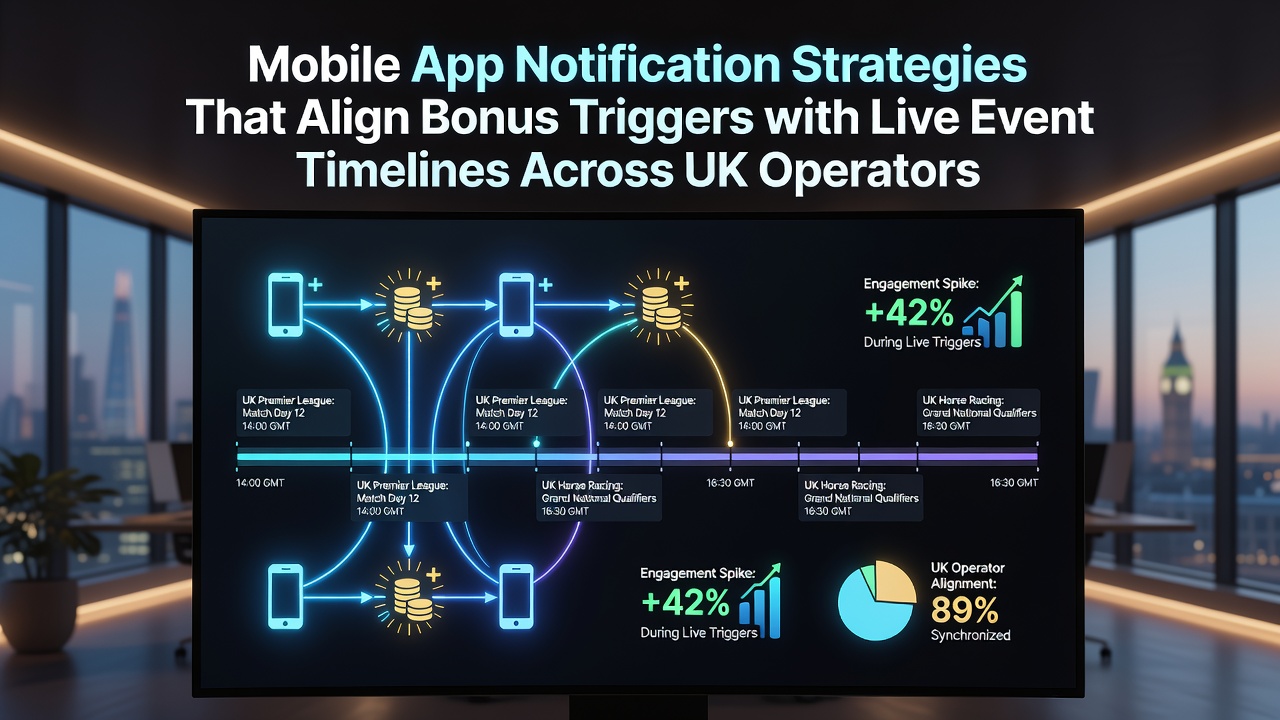
Mobile App Notification Strategies That Align Bonus Triggers with Live Event Timelines Across UK Operators
UK operators have developed notification frameworks that coordinate push alerts with real-time event schedules, ensuring bonus activations coincide with matches, races, and other live moments. These systems rely on backend timelines pulled from official fixtures, where triggers activate minutes before kickoffs or post times. Data from operator platforms indicates that such alignment increases user engagement rates during peak windows, particularly in August 2026 when several firms rolled out enhanced API integrations for faster event syncing.
Core Mechanics of Timeline Integration
Notification engines pull schedules from league databases and racing calendars, then layer bonus conditions onto those slots; for instance, a deposit match might unlock only during a specific Premier League window. Developers segment alerts by user location and device settings, which prevents overlaps while maintaining precision. Observers note that operators test these sequences in staging environments before live deployment, confirming that delays stay under three seconds across major networks.
Personalization Through User Data Patterns
Algorithms analyze past interaction logs to refine delivery times, matching bonus prompts to individual habits such as evening racing sessions or weekend football blocks. Research from the University of Nevada, Las Vegas shows similar timing models in regulated markets improve retention when notifications land within narrow event buffers. Operators apply machine learning to adjust for time zones and device activity, creating sequences that feel tailored without manual intervention.
Technical Tools Supporting Synchronization
Cloud-based schedulers and event listeners form the backbone, allowing apps to poll live feeds every few seconds. Integration with third-party sports data providers supplies the raw timelines, while in-app geofencing adds another layer for location-specific offers. Figures from industry reports reveal that these setups handle thousands of simultaneous triggers during busy periods like August evenings packed with overlapping fixtures.
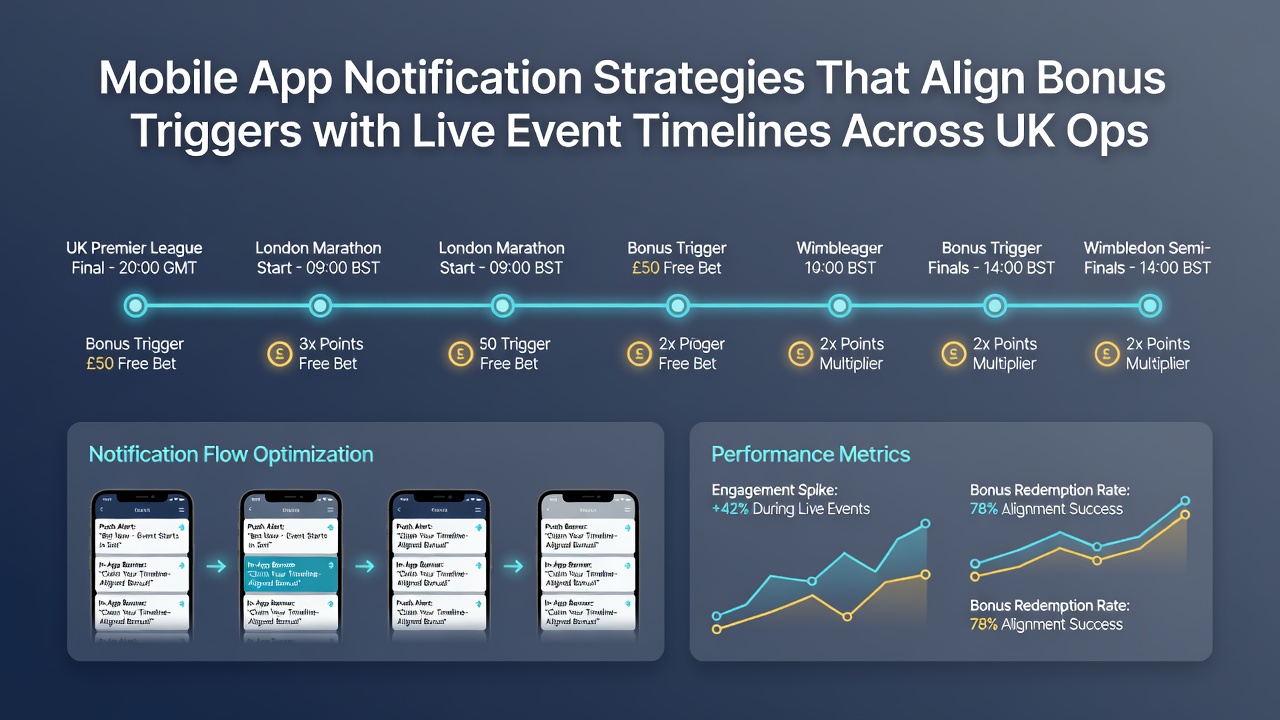
But here's the thing: operators must balance frequency to avoid alert fatigue, so many cap daily pushes at four per user while prioritizing high-value events. Testing cycles include A/B variants where one group receives pre-event nudges and another gets post-trigger confirmations, with results feeding back into the models.
Regulatory and Compliance Considerations
Frameworks from bodies such as the European Gaming and Betting Association emphasize transparent timing disclosures, requiring apps to state exactly when a bonus window opens and closes. In parallel, Australian research from the University of Sydney's gambling studies unit highlights how precise alignment reduces disputes over missed opportunities. Operators document every trigger sequence in audit logs, which regulators review during periodic checks to verify adherence to event-based rules.
What's interesting is the shift toward predictive elements in August 2026, where apps began forecasting schedule changes from weather data or team announcements and adjusting notifications accordingly. This reduces instances where a bonus fires after an event has started, maintaining the intended alignment across football, racing, and other categories.
Case Examples from Operator Practices
One platform routes notifications through a central hub that cross-references user preferences with live streams, sending a prompt exactly 15 minutes before a listed race or match. Another uses segmented lists to deliver casino-linked bonuses only during downtime between sporting segments, creating natural transitions in the timeline. Those who've examined the systems point out that fallback protocols activate if feeds lag, ensuring the bonus still triggers within acceptable margins.
Future Adjustments in Notification Delivery
Developers continue refining latency controls and expanding support for additional event types, incorporating more granular data feeds. Reports indicate steady growth in adoption of these synchronized strategies among UK operators, driven by measurable lifts in session durations during aligned windows. External monitoring tools now track delivery success rates in real time, flagging any drift from intended schedules.
Conclusion
UK operators maintain these notification systems through continuous updates that tie bonus mechanics directly to verified live timelines, supported by data analytics and compliance protocols. The approach relies on established technical standards and external research benchmarks to sustain accuracy across seasonal schedules. As event volumes fluctuate, the frameworks adapt without altering core alignment principles.